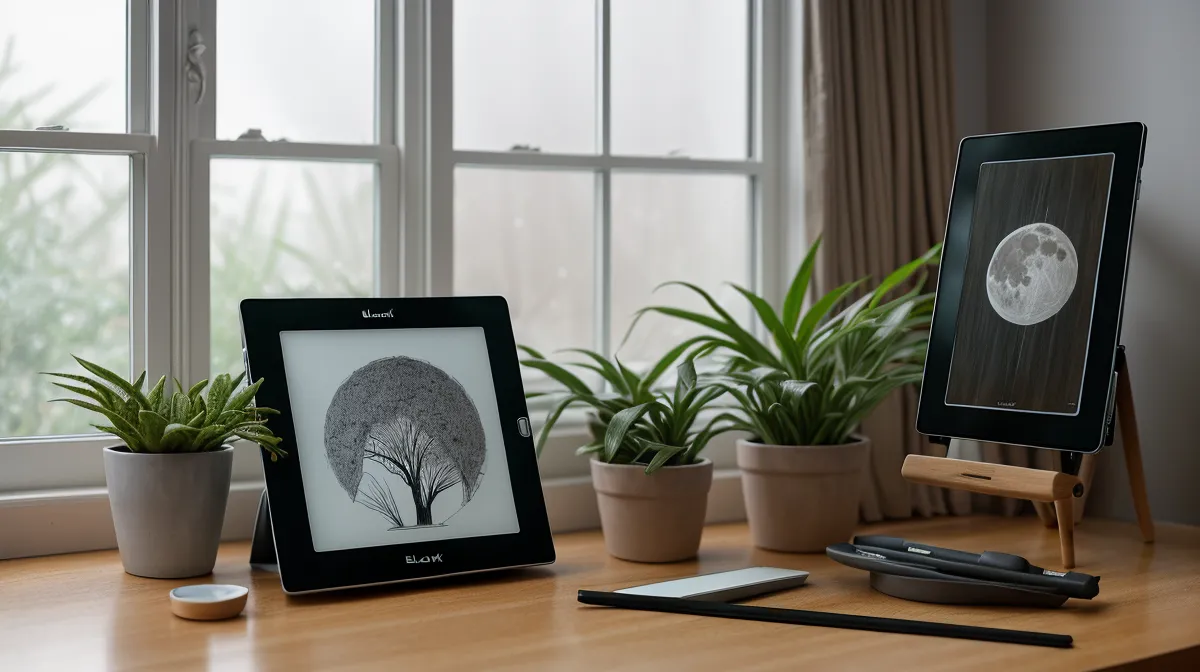
One rainy afternoon last November, I sat in my studio in Portland, staring at a blank digital canvas that felt less like a workspace and more like a portal into a vacuum. Outside, the sky was doing that heavy, charcoal-gray thing it does when the city is hitting its average rainfall of 5.63 inches for the month. But the real weather was inside. The vibrant teals and sunset oranges I usually obsessed over felt like literal static—a hollow, vibrating grayness that seemed to hum at a frequency right at the lower limit of human hearing, somewhere around 20 Hz, vibrating in my chest like a warning.
Heads up—this site contains affiliate links. If you purchase through them, I earn a commission at no extra cost to you. I only share spiritual tools and programs I have personally explored, like the ones that helped me stop spiraling during my own drought. Full disclosure here.
The Void Between the Brushstrokes
I used to think creative burnout was just being tired. I thought it meant I needed more caffeine or a better Pinterest board. But this was different. My technical skill was still there—I could still draw a perfect line—but the 'soul' of the work had evaporated. It felt like I was performing a ghost of my own talent. This, I eventually learned, wasn't just a block. It was the beginning of what people call the Dark Night of the Soul.
The term actually comes from a 16th-century poem by the Spanish mystic St. John of the Cross. It describes a period of spiritual purgation where the old self starts to dissolve. For those of us who make things for a living, this is terrifying because our 'self' is often tied directly to our output. When that connection snaps, it feels like you're losing your identity and your paycheck at the same time.
Sign 1: The Technicality Without the Pulse
The first sign I noticed was a strange disconnect. I was still getting freelance inquiries, still hitting deadlines, but I felt like a robot. In Jungian psychology, this is often linked to the concept of nigredo—the first stage of the alchemical process involving decomposition. You are essentially breaking down your old creative ego to make room for something deeper.
For me, it looked like staring at a client's brief and feeling absolutely nothing. No spark, no 'aha' moment. Just the realization that I was going through the motions. If you find yourself looking at your portfolio and feeling like it was painted by a stranger you don't even like anymore, you might be entering the nigredo phase. It’s not that you've lost your talent; it’s that the source you’re drawing from is changing its shape.
Sign 2: The Failure of the Old Toolkit
By mid-February, I was desperate. I tried everything in my old toolkit. I doubled down on my Simple Spiritual Morning Routine for Busy Freelancers and Artists, thinking if I just meditated harder or drank more matcha, the light would come back on. I bought new brushes. I rearranged my desk. I even tried those high-intensity discipline hacks where you lock your phone in a drawer for eight hours.
Nothing worked. In fact, the harder I pushed, the more the universe seemed to pull back. This is a hallmark of the Dark Night: the tools that used to bring you 'up' suddenly feel heavy and useless. It’s like trying to start a car with a key that no longer fits the ignition. I’m not a doctor or a licensed therapist, and I have zero medical training, but I know what it feels like when your nervous system decides it's done with the old way of doing things. If you're feeling a deep, persistent malaise that doesn't lift with rest, please talk to a professional to rule out clinical depression—sometimes the spiritual and the psychological overlap in messy ways.
Sign 3: The Financial Panic vs. Spiritual Surrender
Here is the thing I need to be honest about: most spiritual advice for a Dark Night tells you to 'withdraw completely.' They say go to a cave, go to a retreat, stop everything. But for those of us who rely on our creative output for our primary income, that advice is a one-way ticket to an eviction notice. This is where the standard narrative failed me.
I couldn't just stop. I had rent in Portland, which isn't exactly cheap. I had to learn how to navigate a 'creative sabbatical' while still keeping the lights on. It meant doing the bare minimum for clients while letting my personal work go completely fallow. I had to stop trying to 'solve' the block and instead start listening to the silence. It was about survival, both financially and soul-wise. I realized that the Dark Night isn't a wall; it's a season. And just like the moon, we have phases that aren't meant for shining.
During this time, I found that looking at my life through a larger lens helped. I actually used a Moon Reading to help me understand the cyclic nature of what I was going through. It sounds a bit out-there, I know, but when you're in the void, having a map that says 'this phase lasts exactly 29.53 days and then it shifts'—even metaphorically—is a lifeline. You can read my thoughts on whether Moon Reading is accurate here. It helped me stop fighting the darkness and start working with it.
Sign 4: Sensory Overload and the Need for Grounding
Everything felt too loud. The coffee shop music, the glow of my monitor, the endless scroll of Instagram—it all felt like it was grating against my raw nerves. This is often a sign that your 'volume' has been turned up as part of an awakening process, but in the Dark Night, it just feels like overstimulation.
I stopped drawing entirely for several weeks in late March. I abandoned my drawing tablet and started just... walking. No podcasts, no music. Just the sound of my boots on the pavement. I had to find ways to settle my energy without needing to produce anything. I started experimenting with sound frequencies to keep my brain from spiraling into 'I'll never work again' thoughts. I actually found that using the Billionaire Brain Wave helped me find a weird kind of focus when I felt most scattered. It’s marketed for abundance, but for me, it was just about finding a frequency that didn't feel like static. You can see how I’ve been using it for creative focus here.

The Turning Point: After Several Weeks of Silence
The shift didn't happen with a lightning bolt. It happened after several weeks of silence, when I finally stopped asking 'When will this end?' and started asking 'What is being born?' I realized that my art had become too performative. I was painting what I thought people wanted to see, not what I was actually feeling. The Dark Night had stripped away the performance because the performer was exhausted.
When the colors finally started coming back in late April, they were different. Muted at first, then deeper, more resonant. I wasn't the same illustrator I was in November. I had moved through the nigredo and into something a bit more honest. For a professional artist, the Dark Night is less of a crisis and more of a necessary restructuring. It's the universe's way of saying your current container is too small for what's coming next.
If you’re in it right now, staring at a blank screen and feeling that 20 Hz hum of dread, please know you aren't broken. You're just in the fallow season. Don't force the harvest. If you need a bit of guidance on how your own personal cycles are playing into this, I really recommend checking out a personalized moon report. It gave me a lot of perspective when I felt like I was just drifting in the dark. It’s a gentle way to start looking at your soul's purpose without the pressure of 'fixing' your career overnight. Take a breath. The light always comes back, even if it looks a little different when it does.